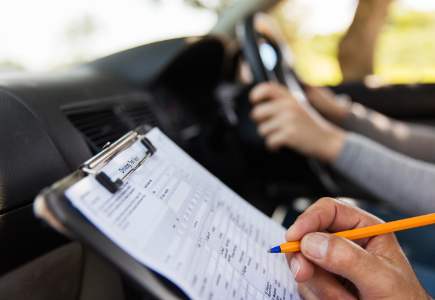


If you feel nervous about learning to drive, you’re not alone. In fact, many of the pupils I teach at DriveOn School of Motoring come to me feeling exactly the same way.
Over the past 37 years as a driving instructor in Newmarket and Cambridge, I’ve worked with complete beginners, drivers returning to the road and people who’ve had difficult experiences behind the wheel in the past.

The good news is this: your anxiety can be managed, and with the right support, it often disappears altogether.
Below, I’ve answered some of the most common questions I hear from nervous drivers, along with practical advice based on decades of experience teaching.
This is the first question most people ask, and the answer is simple. Driving is a new skill that puts you in control of a vehicle on what are often busy roads. That naturally brings a sense of responsibility.
Some common reasons include:
One of the biggest benefits is simple:
Passing your test in a manual car allows you to drive both manual and automatic vehicles. In contrast, an automatic licence restricts you to automatic cars only.
This is especially useful if you:
From my experience, nervousness isn’t a weakness. It usually means you care about doing things properly, and that’s actually a strong foundation for becoming a safe driver.
Yes, absolutely! I’ve seen it time and time again.
Many of the most nervous learners I’ve taught have gone on to pass their test and become very capable, confident drivers. In some cases, they become more aware and cautious than average, which is a real advantage on the road. Often it’s those who are over-confident that are more likely to drive recklessly.
At DriveOn School of Motoring, I tailor every lesson to the individual. That means we move at your pace, not a fixed schedule. There’s no pressure to rush, and no expectation that you should ‘just get it’ straight away.
Confidence builds gradually, and that’s exactly how it should be.
Nervous driver lessons aren’t about pushing you harder. They’re about creating the right environment so you can learn without unnecessary stress.
When I teach nervous drivers in Newmarket and Cambridge, I focus on:
As a DIA coaching certificate holder, I’m trained to adapt my teaching style depending on how you learn best. Some people need more reassurance, others prefer detailed explanations. My job is to recognise that and adjust accordingly.
There are a few simple things that can make a real difference:
1. Don’t put pressure on yourself
Remember, you’re learning, not performing. Mistakes are part of the process.
2. Arrive a few minutes early
Rushing increases anxiety. Giving yourself time helps you settle.
3. Focus on one small goal
Instead of worrying about the whole lesson, concentrate on something simple, like moving off smoothly or improving your steering.
4. Breathe properly
It sounds basic, but steady breathing helps reduce physical tension.
Over the years, I’ve found that once a lesson begins, most nerves fade quite quickly. It’s often the anticipation that feels worst.
This is something many learners worry about, but it’s very straightforward.
If you feel uncomfortable at any point, we simply slow things down or stop. There’s no pressure to continue if you’re not ready.
At DriveOn School of Motoring, I make sure every pupil feels in control of their learning. That might mean:
You’re never expected to push through anxiety on your own. That’s what I’m there for.
There’s no fixed answer, because everyone is different.
Some learners feel more confident after just a few lessons. Others take a bit longer, especially if they’ve had a negative experience in the past.
What matters is steady progress. With consistent lessons and the right approach, confidence builds naturally over time.
In my experience, the turning point usually comes when something ‘clicks’. A manoeuvre feels easier, or a situation that once caused worry becomes manageable. From there, progress tends to accelerate.
Very much so.
I often work with people who passed their test years ago but haven’t driven in a long time. It’s incredibly common, and nothing to feel embarrassed about.
Refresher driving lessons are designed to:
Whether it’s returning to local driving or preparing for motorway lessons, I tailor everything to suit your needs and comfort level.
Yes, they can make a big difference.
Mock tests are particularly useful if your nerves are focused on the driving test itself. They help you:
At DriveOn School of Motoring, I use mock tests as a confidence-building tool, not a way to catch you out. The aim is to prepare you, not to add pressure.
This is one of the most important decisions you’ll make.
A good instructor for nervous drivers should be:
With 37 years of teaching experience in Newmarket and Cambridge, I’ve developed an approach that focuses on reassurance, structure, and steady progress.
Learning to drive isn’t just about passing a test. It’s about becoming a safe, confident driver for life.